
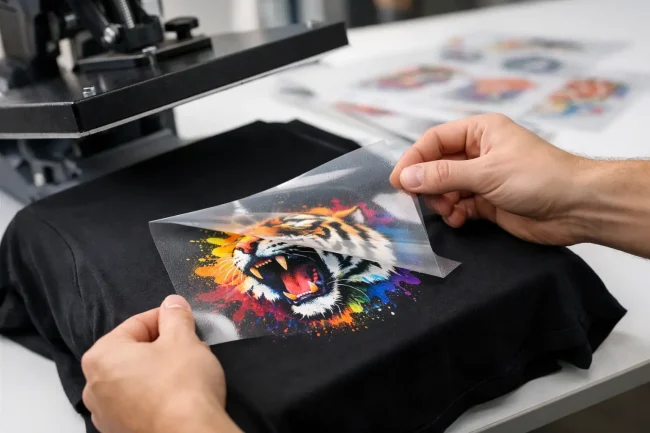
A transfer that looks perfect on the film can still fail on the garment if the pressing stage is rushed. That is why knowing how to apply DTF transfers properly matters just as much as print quality. For garment decorators and print businesses, the difference between a clean, durable finish and a costly remake usually comes down to preparation, press settings and timing.
DTF is forgiving in some ways, but not in every way. It works across a wide range of fabrics and opens up profitable production opportunities, yet it still relies on controlled heat application. If your pressure is uneven, your garment contains moisture, or your peel timing is wrong, you can lose edge definition, reduce wash durability or leave a finish that feels heavier than it should.
What you need before applying DTF transfers
The application process starts well before the transfer reaches the platen. You need a reliable heat press with accurate temperature control, even pressure and a flat pressing surface. A domestic iron is not a commercial solution. It cannot deliver the consistency required for repeatable output, especially if you are producing customer orders rather than one-off samples.
You will also need the correct garment for the job, a lint roller if the fabric attracts debris, and a clean working area. In production environments, small contaminants cause disproportionate problems. Stray fibres, dust and moisture can all interfere with adhesion and surface finish.
The transfer itself should be stored flat and handled carefully. Creased film, contaminated adhesive powder or damaged print edges will all show up once pressed. If you are buying ready-to-press transfers rather than printing in-house, consistency from your supplier becomes part of your production quality.
How to apply DTF transfers step by step
The most reliable approach is to follow a repeatable method every time. Small shortcuts often look harmless at first, but they tend to appear later as returns, complaints or wasted garments.
How to Apply DTF Transfers
1. Prepare the garment
Place the garment on the press and pre-press it for a few seconds. This removes moisture and flattens the print area. It also helps identify seams, zips, pockets or fabric texture that may affect pressure.
If the garment has visible lint or loose fibres, remove them before placing the transfer. This is especially important on darker cottons, fleeces and hoodies, where debris can become trapped under the adhesive layer.
2. Position the transfer accurately
Lay the transfer in the correct position with the design facing up. Check alignment carefully before pressing, particularly for chest logos, neck labels or multi-position jobs. In a commercial setting, inconsistent placement creates an unprofessional finish even when the print itself is excellent.
For bulk work, it is worth standardising placement measurements by garment size and style. That reduces variation across orders and makes staff training easier.
3. Press with the correct settings
Most DTF transfers are applied at around 150°C to 160°C for roughly 10 to 15 seconds using medium to firm pressure. Exact settings can vary depending on film, adhesive, garment type and press performance, so the transfer supplier’s guidance should always take priority.
This is where many avoidable issues begin. If temperature is too low, the adhesive may not bond fully. If it is too high, you risk scorching sensitive fabrics or affecting the print finish. If pressure is too light, edges may not seal properly. If it is too heavy, certain fabrics can distort or the print may take on an over-compressed feel.
4. Peel at the right time
Some DTF transfers are cold peel, others are warm peel. Follow the product specification rather than relying on habit. Peeling too early can lift parts of the design. Waiting too long on a warm-peel product can also affect the finish.
When peeling, do it in a smooth, controlled motion. If any area lifts, stop and repress with appropriate cover protection if needed. Forcing the peel usually makes the problem worse.
5. Finish press if required
Many operators apply a second press for a few seconds after peeling. This can improve adhesion, refine the surface and give the print a more finished hand feel. Depending on the garment and the desired effect, you may use a protective sheet or finish press through a suitable cover.
This stage is especially useful for professional consistency. It is not always strictly necessary, but in regular production it often helps deliver a cleaner end result.
Common mistakes when applying DTF transfers
The most common problem is treating every garment the same. A lightweight performance polyester and a heavy cotton sweatshirt do not always behave identically under heat and pressure. The transfer may be the same, but the substrate is not.
Another issue is relying on display settings rather than real press performance. Heat presses can drift over time, and pressure can be uneven across the platen. If results are inconsistent, calibration and equipment condition should be checked before blaming the transfer.
Moisture is another frequent cause of poor adhesion. Garments stored in cool or damp environments often need a proper pre-press. Skipping that step can leave steam trapped during application, which interferes with bonding.
Then there is overproduction pressure. In busy workshops, staff may shorten dwell times or peel too quickly to keep orders moving. That might save seconds at the press, but it often costs more later in wasted stock and rework.
Fabric type makes a difference
Cotton is generally straightforward, which is one reason DTF has been adopted so widely. Blends also tend to perform well. Polyester can produce excellent results too, but heat sensitivity must be respected. Lower application settings may be needed depending on the garment.
Textured, water-resistant or heavily treated fabrics can be less predictable. It does not mean DTF cannot be used, but testing is essential. Commercial users should never assume that because one softshell worked, every softshell will behave the same way.
This is where experienced support matters. Businesses investing in DTF need more than a machine and a box of consumables. They need guidance on matching films, powders, garments and pressing conditions to the actual work they plan to produce.
How to get more consistent production results
Consistency comes from process control. Use the same press settings for the same transfer and garment combination unless there is a proven reason to change them. Record successful settings. Train staff to follow the same application method. Build simple checks into production rather than relying on memory.
It also helps to test at the start of a job, especially when using a new garment brand or fabric composition. A quick test press is far cheaper than discovering a problem halfway through a run of 100 pieces.
If your business handles volume, equipment quality becomes even more important. Presses with uneven heat or weak pressure adjustment create avoidable variation. That is one reason many commercial users choose a complete solution rather than piecing together equipment from different sources. Reliable output depends on how the whole workflow performs, not just one component.
When application problems point to a bigger issue
Sometimes the pressing stage is not the real problem. If transfers show inconsistent adhesive coverage, poor release behaviour or unstable print quality, the issue may sit earlier in the process. That could be print curing, powder application, film quality or storage conditions.
For businesses running DTF in-house, troubleshooting needs to look at the full production chain. For businesses buying ready-to-press transfers, supplier quality control is part of operational reliability. The best results come when print, consumables, equipment and technical advice all work together.
This is where a specialist partner can make a real commercial difference. A company such as DTF Magic® supports businesses not only with equipment and consumables, but with training, installation and practical after-sales guidance that helps reduce trial and error.
How to apply DTF transfers with confidence
If you want dependable results, treat DTF application as a controlled production step rather than the final quick task before packing. Pre-press the garment, use proven settings, apply even pressure, peel at the correct stage and test when variables change. That is the method that protects print quality, repeat orders and profit margins.
How to Apply DTF Transfers. There is no single setting that suits every transfer, fabric and press, and any supplier claiming otherwise is oversimplifying the process. The good news is that once your workflow is set correctly, DTF is capable of excellent consistency across a wide range of garments. A careful pressing routine is not extra effort for the sake of it. It is what turns a good transfer into a professional finished product.