If your transfers are coming out dull, tacky or inconsistent, the issue is rarely just the artwork. When businesses ask how to print DTF transfers properly, the answer almost always comes back to process – the right equipment, the right settings, and a workflow that stays stable under production pressure.
DTF can be a highly profitable print method, but it is not forgiving of poor setup. A strong result depends on how well your printer, film, ink, powder, curing stage and heat press work together. For start-ups, that means avoiding the temptation to piece together a system based on price alone. For established decorators, it usually means tightening control over production variables that quietly affect quality and repeatability.
How to print DTF transfers with a commercial workflow
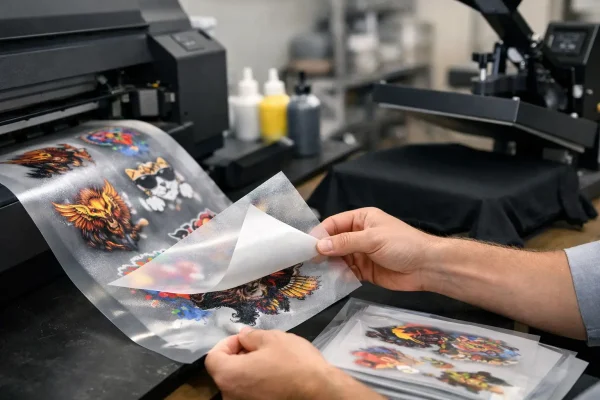
At its simplest, DTF printing involves printing a mirrored design onto coated film, applying adhesive powder to the wet ink, curing that powder so it bonds correctly, and then pressing the finished transfer onto the garment. The basic sequence is straightforward. The difference between a hobby-level result and a commercially dependable one comes from consistency at every stage.
That starts with the printer itself. A DTF printer needs to deliver accurate ink laydown, reliable white ink performance and stable daily operation. White ink is often where businesses run into avoidable problems, because it settles quickly and needs proper circulation or stirring to remain usable. If white ink management is poor, prints can lose opacity, clog heads or become patchy, especially on dark garments.
Film choice matters just as much. Not all films release cleanly, accept ink evenly or perform well at speed. If the coating is inconsistent, the print can spread, powder can cling where it should not, or the final transfer can peel poorly. In production, small material weaknesses quickly become expensive. That is why serious operators tend to build around a tested system rather than mixing unknown films, inks and powders in search of marginal savings.
The equipment you need before you start
If you are working out how to print DTF transfers for sale rather than occasional in-house jobs, think in terms of a complete production setup rather than a single printer. The essentials are the DTF printer, RIP software, DTF ink set, coated film, hot-melt adhesive powder, a curing solution and a dependable heat press.
The curing stage deserves particular attention. Some smaller operations begin with manual powdering and oven curing, which can work if volumes are modest and the operator is disciplined. But once order numbers rise, bottlenecks appear quickly. Uneven powder application, under-curing and variable dwell times all affect transfer quality. Automated or more controlled curing systems help reduce those variables and make output easier to predict.
Heat pressing is also often underestimated. A transfer can be printed perfectly and still fail if the press delivers uneven pressure or unstable temperature. Commercially, you need a press that holds settings accurately across the platen and gives repeatable results over a full day, not just during a short demonstration.
Artwork and RIP settings set the tone
Before any ink hits the film, artwork preparation needs to be right. Designs should be high resolution, cleanly separated and correctly mirrored. Fine detail, gradients and small text are all possible with DTF, but they depend on proper file preparation and RIP control.
RIP software manages colour output, white ink layers and print order. This is where many production issues begin or are solved. Too much ink can cause bleeding, extended drying times and poor powder adhesion. Too little can leave the image weak and lacking density. White underbase settings are especially important, because they influence opacity, stretch performance and the visual strength of the finished print on coloured garments.
There is no universal setting that suits every printer, film and design type. A bold logo for workwear needs a different balance from a photographic fashion print. The practical approach is to build tested profiles around your own equipment and consumables, then keep those settings controlled. Constant experimentation during paid jobs usually leads to waste rather than improvement.
Printing, powdering and curing without guesswork
Once the job is loaded, the design is printed onto the film in reverse. The colour layers and white layer must sit cleanly, with no banding, misalignment or flooding. A stable environment helps here. Temperature, humidity and dust all affect print behaviour more than some businesses expect, particularly in the UK where workshop conditions can shift through the year.
After printing, adhesive powder is applied while the ink is still wet. The aim is full, even coverage on the printed areas only, followed by clean removal of excess powder. Too little powder weakens adhesion. Too much can leave a heavy hand feel, rough edges or contamination around the design. This is one of the clearest examples of why operator training matters. Good powdering is not complicated, but it does require consistency.
Curing then melts the powder to a smooth, bonded adhesive layer without scorching the film or overcooking the glue. Under-cured transfers may look acceptable at first but fail after pressing or washing. Over-cured transfers can lose bonding performance and feel brittle. The right curing point is a controlled, repeatable state – not a visual guess made differently from one batch to the next.
How to print DTF transfers that press well onto garments
A finished transfer is only half the job. Pressing technique affects final appearance, durability and customer satisfaction. The garment should be suitable for DTF, free from moisture and pressed flat before application if needed. Placement accuracy matters, especially in trade or uniform work where repeat orders demand consistency.
Temperature, pressure and dwell time must match the transfer and garment type. Cotton, polyester and blends can behave differently, and some technical fabrics need a more careful approach to avoid marking or distortion. This is where an experienced supplier can save businesses a great deal of wasted stock. The transfer may be suitable, but the pressing method still needs to reflect the fabric.
Peel timing is another variable. Some films are designed for hot peel, others for warm or cold peel. Rushing this stage can damage the print surface or reduce edge definition. A final repress is often used to improve finish and durability, but again, it needs to be based on the transfer system you are using rather than habit.
Common problems and what usually causes them
If transfers are cracking, peeling or washing poorly, the fault is not always in the adhesive. It may be under-curing, uneven pressure, poor garment preparation or incompatible settings. Banding generally points back to printhead condition, maintenance routines or feed calibration. Dull colour can come from weak profiles, poor ink performance or incorrect white underbase control.
One of the most costly mistakes is treating each issue as a one-off fault rather than looking at the whole workflow. DTF is a connected process. Changing powder, film or curing temperature without understanding the wider effect can create a fresh problem while solving the first one.
That is why support matters. Businesses investing in production equipment usually need more than a machine delivered to site. They need installation advice, training, practical setup guidance and someone who understands what commercial output actually looks like. DTF Magic® has built its approach around that reality, because dependable production comes from a complete system and ongoing technical backing, not from hardware alone.
How to Print DTF Transfers
Getting reliable results at scale
For low volumes, you can sometimes get away with a process that is slightly untidy. At scale, weaknesses show up fast. If white ink circulation is inconsistent, if curing is uneven, or if press settings vary between operators, reject rates rise and margins shrink.
The goal is not simply to produce a transfer. It is to produce the same transfer repeatedly, across different shifts, garment types and order sizes. That means documenting settings, maintaining equipment properly, controlling consumables and training staff to follow a clear process. It also means accepting that the cheapest route into DTF is not usually the most economical route once downtime, waste and support gaps are taken into account.
Businesses that do well with DTF tend to treat it as a production discipline. They invest in equipment that is suited to their volume, use consumables that have been tested together, and build support into the decision from the start. That approach gives them cleaner output, fewer failed jobs and more confidence when lead times tighten.
If you are deciding how to print DTF transfers for your own operation, focus less on chasing isolated components and more on building a process you can rely on every working day. That is what turns DTF from an interesting print method into a dependable commercial service.