how to start dtf printing business
A lot of DTF start-ups run into trouble before the first serious order lands. Not because demand is weak, but because the setup was built around a printer alone rather than a working production system. If you are looking at how to start DTF printing business operations in the UK, the real question is not simply what machine to buy. It is how to build a dependable workflow that can produce consistent transfers, protect margins and keep customers coming back.
DTF can be a strong commercial opportunity for garment decorators, print shops and promotional product businesses because it suits short runs, detailed artwork and a broad range of fabrics. It also gives you flexibility. You can print gang sheets for trade work, produce transfers for your own garments, or supply ready-to-press designs to other businesses. The opportunity is real, but so is the risk of buying the wrong configuration, underestimating curing requirements or relying on limited technical backup when production problems appear.
How to start DTF printing business planning
The businesses that make DTF work tend to approach it as a production investment, not an impulse purchase. Before looking at equipment, decide what type of work you want the system to support. A home-based start-up taking local personalised clothing orders has different needs from a commercial print room supplying regular trade customers. Volume, turnaround expectations, available space and cash flow all shape the right setup.
You also need to be clear on where your revenue will come from. Some businesses focus on finished garments and use DTF as one decoration method among several. Others build a transfer-only model and sell printed transfers to brands, embroidery firms and local decorators. Neither route is automatically better. Finished garments can deliver stronger margins per order, while transfer supply can offer repeat demand and simpler logistics. The right decision depends on your customer base, existing capabilities and how quickly you need the business to scale.
It is worth being honest about technical confidence as well. DTF is not difficult to learn, but it does require proper installation, correct environmental conditions and a disciplined daily routine. If you are new to production printing, support and training are not optional extras. They are part of what keeps wasted film, failed prints and downtime under control.
Build a complete production setup, not a partial one
One of the most common mistakes when learning how to start DTF printing business operations is to compare printers by headline price and stop there. A DTF workflow relies on several pieces working together. The printer matters, but so do the curing process, heat press performance, film and powder compatibility, ink management and the support behind the equipment.
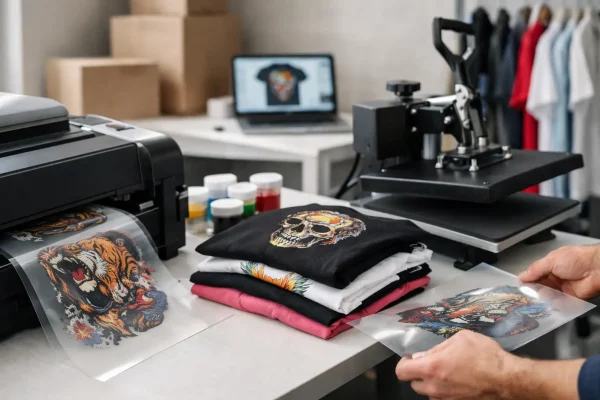
A complete setup typically includes the DTF printer itself, a curing solution, a reliable heat press, consumables and practical production support. Depending on the model, you may also need an ink stirring unit and other workflow tools to maintain consistency. If one part of the process is weak, the whole system suffers. A good printer paired with poor curing or inconsistent consumables will still produce poor commercial results.
This is why serious suppliers focus on an ecosystem rather than a single box sale. Installation, demonstrations and training matter because they shorten the learning curve and reduce costly trial and error. Ongoing technical guidance matters because production questions do not always appear on day one. They often show up two months later, when the machine is busy and deadlines are tight.
Understand the real startup costs
Your startup budget should cover more than equipment. It needs to include consumables, test production, workspace preparation and working capital. Ink, film and powder are recurring costs, and they should be treated as part of your margin model from the start. You will also need suitable stock if you are pressing onto garments, plus packaging, artwork handling and basic business administration.
There is no universal figure because startup costs depend on production level, but a useful approach is to separate spending into three groups. First is capital equipment. Second is setup and training. Third is operational cash for the first few months. That last category is often overlooked. Early-stage businesses may win orders quickly but still need time to build routine, refine pricing and establish repeat customers.
Cheaper entry points can be attractive, especially for new businesses, but low purchase cost does not always mean lower business risk. If the system is inconsistent, unsupported or badly matched to your workload, the hidden cost appears in reprints, wasted consumables and delayed orders. Reliable output is usually a better investment than headline affordability alone.
Space, ventilation and workflow matter more than many expect
DTF production needs a practical working environment. You do not need a huge premises to begin, but you do need a space that can support clean workflow, stable conditions and safe operation. The printer, curing stage, heat pressing area and finishing bench should be organised so work moves logically from print to application.
Temperature, humidity and cleanliness all affect print quality. Dust, unstable conditions and poor handling can lead to inconsistent results. Ventilation is also an important consideration, particularly around curing equipment and general production comfort. A supplier with hands-on installation experience can help you understand what your premises actually need rather than what looks acceptable on paper.
This is another area where it pays to think beyond launch day. If you expect to grow, leave room for more efficient movement, extra stock and higher output. A cramped setup may be workable for occasional orders but quickly becomes a bottleneck when lead times tighten.
Learn the numbers before you set your prices
Pricing is where many new operators either lose orders or lose profit. To price DTF work properly, you need to know the cost per print, the labour involved, the pressing time, the garment cost where relevant and an allowance for overheads. Then you need to leave room for profit and inevitable wastage.
The trade-off is straightforward. If you price too cheaply, you may win early business but struggle to sustain quality and service. If you price too high without clear value, the market pushes back. The answer is not guesswork. It is understanding your production cost and positioning your service around reliability, consistency and turnaround.
For transfer supply, gang sheet efficiency can significantly affect margin. For finished garments, order complexity matters just as much as print size. A simple chest logo on a standard tee is not priced in the same way as multiple placements across mixed garment types. Good pricing should reflect real production effort, not just the size of the artwork.
Quality control is your sales tool
The fastest way to undermine a new DTF business is inconsistent output. Customers may accept the occasional issue from a start-up once. They rarely accept it twice. Quality control therefore needs to be part of daily production, not an afterthought once complaints appear.
That means checking artwork quality before print, monitoring ink and film performance, confirming curing standards and testing adhesion where needed. It also means maintaining the equipment properly. DTF can produce excellent, durable results, but only when the process is controlled.
Commercial buyers notice the difference between hobby-level output and production-grade transfers. Edges should be clean, colour should be consistent, pressing should be repeatable and the finished result should hold up in wear and washing. This is why after-sales support has real value. When problems appear, practical guidance helps you correct the issue before it becomes a pattern.
How to start DTF printing business growth the sensible way
Once the setup is stable, growth usually comes from one of three directions. You can increase local garment orders, develop trade transfer supply, or expand into specialist niches such as workwear, events, schools or branded merchandise. The best route depends on where demand already exists around your business.
It is usually wiser to grow through repeatable workflow than to chase every possible opportunity at once. A smaller number of reliable customers with predictable orders is often more valuable than a large number of one-off jobs that disrupt production and pricing discipline. If your system is dependable, you can scale with far more confidence.
For established decorators, adding DTF can also strengthen existing services rather than replace them. It can fill gaps where other print methods are less efficient, support short runs and improve flexibility for detailed designs. In that sense, DTF is not just a startup opportunity. It is also a practical expansion route for businesses that already understand the value of dependable production.
Choosing the right supplier plays a major part here. A business partner that offers equipment, consumables, training and technical backup can help you move from startup uncertainty to stable output far more quickly than a basic online purchase. That joined-up support is often what turns a promising idea into a working business.
If you are serious about starting in DTF, think less about buying a printer and more about building a production operation that can cope with real customer expectations. When the setup, support and workflow are right, growth becomes far easier to plan for.