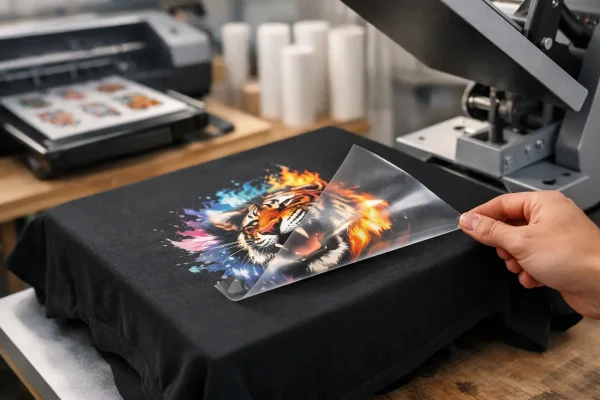
DTF Transfers for Shirts that looks sharp on press day but cracks after a few washes is not a product problem alone. It is usually a workflow problem. That is why dtf transfers for shirts have become such a practical option for UK garment decorators, print shops and trade suppliers that need reliable output without limiting themselves to a narrow range of fabrics.
For commercial businesses, the appeal is straightforward. DTF gives you a way to produce vibrant, detailed transfers that you can apply to cotton, polyester and blended garments with far less restriction than some older decoration methods. Used properly, it supports fast turnaround, consistent quality and a cleaner route from artwork to finished garment. The key phrase there is used properly. Results depend on more than the film itself.
Why dtf transfers for shirts suit commercial production
Shirts are one of the most common garments to decorate in the market, but they are rarely all the same. One order may be for soft ringspun cotton retail tees, the next for performance polos, and the next for workwear with more demanding wash expectations. That variation is where DTF stands out.
A well-produced transfer offers strong colour, fine detail and good stretch across different shirt types. For many businesses, that means fewer compromises when quoting for mixed garment ranges. You are not forced to turn work away because the fabric content is awkward or because the design includes gradients, small text or multiple colours.
There is also a commercial advantage in separating print production from garment application. Transfers can be printed ahead of time and pressed as orders come in. That can help with stock holding, busy periods and gang sheet efficiency. For a growing print business, flexibility like that matters because machine time and labour time are not always available at the same moment.
What makes a good DTF transfer on shirts
When customers judge a shirt, they are not thinking about ink chemistry or adhesive powder. They are looking at three things – appearance, feel and durability. A good transfer has to satisfy all three.
Appearance starts with print definition. Fine lines need to stay clean, solid fills need to remain dense, and colours need to look alive on both light and dark garments. If the transfer looks grainy, muddy or uneven, the problem may sit with print settings, ink management, film quality or curing consistency.
Feel is more nuanced. DTF will not feel identical to screen printing with a soft-hand ink, and it should not be sold that way. But it should still feel controlled and professional, not heavy, brittle or rubbery. Excess adhesive, poor curing or unsuitable press settings can all create a finish that feels thicker than it should.
Durability is where process discipline shows. A shirt transfer must cope with stretching, washing and day-to-day wear. If adhesion is weak or curing is incomplete, failures usually show up quickly. Edges can lift, detail can break, or the print may lose impact far earlier than expected. In a commercial setting, every reprint eats into profit, so dependable application matters as much as the transfer itself.
DTF transfers for shirts are only as good as the workflow
This is where many buyers either save themselves trouble or create it. It is easy to focus on a headline machine specification or a low consumables price, but shirt production is a system. Printer, ink circulation, film, powder, curing, heat pressing and operator technique all affect the final result.
If one part of that chain is unstable, consistency suffers. In real production, inconsistency is expensive because it creates wastage, slows order dispatch and undermines confidence on repeat jobs. A transfer that works well on one shirt and poorly on the next is not good enough for a business trying to scale.
That is why serious buyers tend to look beyond product listings and towards support. Installation, setup guidance, profiling, operator training and after-sales help are not extras for commercial DTF. They are part of the production capability. Businesses new to the process often need help getting conditions, settings and maintenance routines right. Established print shops usually need a setup that fits into existing workflows without introducing unnecessary downtime.
Choosing between ready-made transfers and in-house production
There is no single answer here because it depends on order volume, margins, lead times and how much control you want over scheduling.
Ready-made transfers can make sense for businesses that want to press shirts without running a full print department. They reduce setup complexity and can be a sensible route for firms testing demand, handling occasional decorated orders or expanding into apparel without immediate investment in print hardware. They also help when labour is better spent on pressing, packing and fulfilment rather than managing daily print production.
In-house production becomes more attractive when volume grows, turnaround demands tighten or custom work becomes more frequent. Bringing transfer production under your own roof gives more control over output, batching and repeat ordering. It can also improve margins over time, provided the system is specified correctly and supported well.
The mistake is to think only in terms of machine ownership. The real question is whether your business is ready to run a dependable DTF workflow every working day. That includes maintenance discipline, consumable management, environmental control and operator confidence.
Common issues with shirt transfers and what they usually mean
Most application problems have a cause that can be traced. If a transfer peels, it may point to poor pressing conditions, unsuitable garment preparation, inconsistent powder coverage or incomplete cure. If colours look dull, the issue could sit with artwork handling, ink performance or print calibration. If the finish feels too heavy, it may be a sign of over-application or settings that are not matched to the film and adhesive being used.
Some shirt types also need a more considered approach. Performance garments, heavily textured fabrics and certain treated materials can behave differently under heat and pressure. That does not mean they cannot be decorated successfully, but it does mean assumptions are risky. Testing remains essential, particularly for customer-supplied garments where fabric quality and finish can vary.
This is one reason many commercial users value technical backup. Problems are easier to solve when you can speak to someone who understands the whole process rather than one isolated component. It shortens the learning curve and reduces the temptation to waste time changing five variables at once.
What to look for in a supplier
For shirt decorators, a supplier should do more than ship boxes. You need a partner who understands output, uptime and the realities of commercial production.
That means clear advice on system suitability, not overselling. A startup operation does not always need the same setup as a high-volume trade printer, and an established business upgrading equipment needs compatibility, efficiency and service continuity. Good guidance should reflect those differences.
It also means support after purchase. Equipment installation, training, maintenance advice and troubleshooting all have a direct effect on whether your shirt transfers remain profitable. The best setup on paper can still underperform if operators are left to work things out alone.
A complete approach is often the strongest one. When printers, curing systems, heat press equipment and consumables are selected to work together, there is less guesswork and better process control. That joined-up model is one of the reasons businesses choose a specialist such as DTF Magic® rather than treating DTF as a collection of unrelated items.
Where DTF fits in a growing garment business
DTF is not a replacement for every other decoration method, and it should not be framed that way. Screen print still has strengths at volume. Embroidery still has a different visual value. Vinyl still suits certain names and numbers work. But for many shirt orders, DTF occupies a highly useful middle ground – flexible, detailed, commercially viable and adaptable across garment types.
That is why it has become such a practical choice for startups and established operators alike. It helps new businesses enter the market without limiting design capability, and it helps experienced printers add capacity or broaden their offer without rebuilding their whole operation around one garment type.
If you are assessing dtf transfers for shirts, the most useful question is not whether the process works. It does. The better question is whether your setup, supplier support and production expectations are aligned well enough to make it work reliably, day after day. Get that right, and shirt decoration becomes far easier to price, produce and repeat with confidence.
The businesses that benefit most are usually the ones that treat DTF as a production system rather than a shortcut, because reliable output is what customers remember when the shirt finally reaches their hands.