Curing Powder for DTF Transfers. A print can look excellent straight off the machine, then fail the moment it reaches the press. In many DTF workflows, that problem starts with curing. If you are asking how to cure DTF powder, the real goal is not simply melting adhesive. It is creating a stable, even bond layer that will transfer cleanly, hold detail, and stand up to production demands.
For commercial garment decorators, curing is one of the stages where small inconsistencies become expensive very quickly. Under-cure the powder and you risk poor adhesion, grainy finishes, patchy transfer and wash failures. Over-cure it and the adhesive can become brittle, scorch, or lose the characteristics needed for a dependable press. Good curing sits in the middle – controlled, repeatable and suited to the film, powder and equipment you are using.
What curing DTF powder actually means
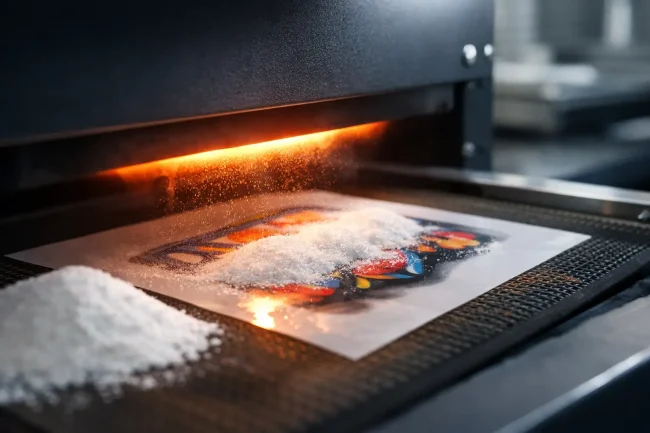
DTF powder is a hot melt adhesive applied to the printed film while the ink is still wet. The curing stage partially melts that powder so it gels and forms a smooth adhesive layer on the reverse of the print. That layer is what bonds the design to the garment during heat pressing.
This matters because curing is not the same as pressing. You are not fully transferring the print at this stage. You are preparing the adhesive so it is ready for transfer later. In practice, that means enough heat to melt and stabilise the powder, but not so much that you distort the film, damage the printed image or overcook the adhesive.
If you run a busy production environment, this distinction is essential. Many quality issues blamed on the press, powder or film are actually curing issues that began earlier in the process.
Curing Powder for DTF Transfers with consistent results
Curing Powder for DTF Transfers with controlled heat and even exposure across the full sheet or roll width. In most setups, that means using a dedicated curing oven or shaker and dryer system designed for DTF production. These systems give far better consistency than improvised methods because they regulate temperature more evenly and reduce operator guesswork.
The broad target is simple. The powder should melt into a smooth, slightly glossy adhesive layer without bubbling, burning or remaining loose and grainy. Exact temperature and dwell time depend on your powder type, film, ink coverage and equipment, so there is no single setting that suits every operation. That is why experienced operators always test and verify rather than relying on assumptions.
A common mistake is to focus only on headline temperature. The real result depends on heat distribution, distance from the heat source, airflow, sheet size and how heavily the design is printed. A dense full-coverage print may behave differently from a small logo with light ink laydown, even if both are cured on the same machine.
What properly cured powder looks like
When Curing Powder for DTF Transfers is done correctly, the adhesive layer appears smooth and fused. It should not look dusty or dry, and it should not show clumps of unmelted powder. The film should remain stable and flat, without obvious warping.
You are looking for a finish that suggests the powder has gelled evenly. Depending on the product, this can appear satin or lightly glossy rather than wet or scorched. If the layer still looks sugary or rough, it usually needs more curing. If it darkens, smokes, or gives off a harsh burnt smell, you have likely gone too far.
What under-cured powder looks like
Under-cured powder often leaves a grainy texture on the back of the film. Some areas may melt while others remain loose. During pressing, this can lead to incomplete adhesion, edges lifting, poor wash durability or inconsistent bonding across larger graphics.
In production terms, under-curing is especially costly because the problem may not always show immediately. The transfer can appear acceptable when first pressed, then fail after handling, stretching or washing.
What over-cured powder looks like
Over-cured powder can become too hard or brittle. In some cases the adhesive loses flexibility, which affects how the finished print performs on garments. You may also see film distortion, adhesive discolouration or reduced transfer quality.
This is one of the reasons makeshift curing methods can create trouble. Excessive spot heat or poor temperature control may seem workable for occasional tests, but they are difficult to scale when consistency matters.
The equipment used to cure DTF powder
If your business is producing DTF commercially, the right equipment makes a significant difference. Dedicated curing ovens, conveyor systems and integrated powder shaker units are designed to keep curing repeatable. That matters for output quality, but it also matters for speed, labour efficiency and reduced waste.
A desktop setup may use a compact curing oven, while higher-volume operations often move to automated systems that powder and cure as part of a continuous workflow. The key point is control. Reliable production depends on stable temperature, even heating and a process your staff can repeat with confidence.
Some businesses try to cure prints with a heat press hovering above the film. While this can work for limited testing or very low-volume output, it is not usually the best route for serious production. Heat distribution is less predictable, sheet positioning can vary, and results are more dependent on operator technique. For a business selling decorated garments, that level of variability is rarely ideal.
Factors that affect Curing Powder for DTF Transfers
The answer to how to cure DTF powder properly always depends on the full production setup. Powder type is one variable, but not the only one. Fine powders, standard powders and specialist formulations may respond differently under heat. Film coatings also vary, and those differences can affect how the powder settles and cures.
Ink coverage is another factor that operators often underestimate. Heavy white ink lays can alter the way heat behaves through the print. Large solid designs may need slightly different treatment from fine-detail artwork. Ambient conditions can also play a part, particularly in spaces with fluctuating temperature or humidity.
This is why a commercial supplier should not simply sell consumables in isolation. The best results come from treating the printer, film, powder, curing system and press as one workflow rather than separate products.
A practical process for better curing
Start by applying powder evenly across the printed film. Shake off the excess thoroughly, as surplus powder can create clumps and uneven curing. Before running a full batch, test a sample print and assess the adhesive layer once cured.
At this stage, visual inspection is useful, but it should not be your only check. Press the sample onto the intended fabric and evaluate peel behaviour, edge adhesion, stretch and finish. If possible, carry out a wash test before approving settings for regular production. This takes a little longer upfront, but it saves far more time than remaking faulty jobs later.
Once you have a reliable result, keep the process controlled. Avoid changing powder, film or curing settings without testing. If you do switch suppliers or materials, recheck the process rather than assuming the previous profile will carry over unchanged.
Common curing mistakes in DTF production
One of the most common problems is rushing the stage because the print looks nearly ready. Powder can appear melted on the surface while still being uneven underneath. Another issue is loading too many sheets without allowing for proper airflow or heat consistency, particularly in smaller ovens.
Poor housekeeping can also affect curing. Contaminated powder, dust, or inconsistent storage conditions may influence how the adhesive performs. So can neglected equipment. If heaters are not performing evenly, results will drift over time and operators may keep increasing settings to compensate, which creates a new set of problems.
For growing print businesses, this is where training and technical support become valuable. Good curing is not just about one setting on one machine. It is about building a repeatable production method that your team can trust every day.
Why curing quality matters to your bottom line
When DTF curing is correct, the whole workflow becomes more dependable. Transfers release more cleanly, garments look more professional, and rework drops. That directly affects margins, turnaround times and customer confidence.
When curing is inconsistent, every downstream stage becomes harder. Pressing becomes less predictable, operators spend time troubleshooting, and quality complaints become more likely. For a business trying to scale output, that is not a minor technical issue. It is a production risk.
That is why many UK print businesses choose to work with suppliers who can support the full process, not just dispatch boxes of consumables. With the right equipment, proper setup and ongoing guidance, curing becomes a controlled part of production rather than a constant source of trial and error.
If you want better DTF results, treat curing as a process worth tightening up. The powder only gets one chance to form the adhesive layer your transfer relies on, and getting that stage right pays you back on every job that follows.